
2026 DOT Inspection Requirements for Trucks & Trailers in West Virginia
If you run a truck or trailer through West Virginia—especially along the I-81 corridor—DOT inspections are not something you want to “hope goes fine.” One overlooked issue can lead to delays, out-of-service orders, and expensive downtime.
In this guide, we break down the 2026 DOT inspections requirements for trucks and trailers in West Virginia, what inspectors focus on, and the most common reasons vehicles fail. Whether you’re based in Martinsburg or moving freight through Hagerstown, Winchester, and surrounding areas, this will help you prepare with confidence.
Table of Contents
Table of Contents
Why DOT Inspections Matter More in 2026
DOT inspections are designed to keep commercial vehicles safe, compliant, and roadworthy. For owner-operators, failing an inspection can mean lost loads, missed appointments, and costly roadside repairs. For fleet managers, repeat violations can turn into a long-term compliance and reputation problem.
In 2026, inspections continue to emphasize the systems that cause the most safety incidents and breakdowns:
- Brake system performance and air leaks
- Lighting and electrical reliability (especially trailers)
- Tire condition, tread depth, and wheel integrity
- Suspension and steering wear that affects stability
- Documentation and required safety equipment
If you’re traveling through Martinsburg WV or nearby areas like Inwood, Falling Waters, Hedgesville, Charles Town, Ranson, and Kearneysville, your best advantage is being proactive—before you’re forced into repairs on someone else’s timeline.
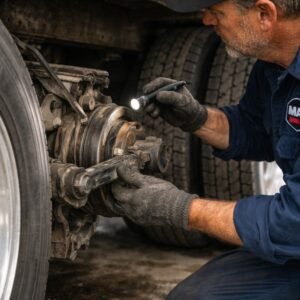
What’s Included in a 2026 Commercial Truck Inspection in WV
DOT inspections follow the annual federal inspection standards aligned with FMCSA requirements. The inspection is comprehensive and typically covers both the power unit and the trailer.
1) Brake System Requirements
Brake systems remain one of the most scrutinized areas because failures are high-risk. Inspectors commonly look for:
- Air leaks, cracked hoses, or damaged brake lines
- Brake chamber condition and secure mounting
- Slack adjuster operation and brake stroke
- Drum/rotor condition and signs of overheating
- Proper function of emergency and parking brakes
Technician Note
A small air leak that seems minor in the yard can become a DOT issue quickly on the road—especially with heavy loads or frequent stops on I-81.
2) Truck & Trailer Lighting Requirements
Lighting and electrical problems are among the most common DOT inspection failures in West Virginia.
- Headlights, high beams, and turn signals
- Brake lights and hazard lights
- Trailer marker lights and ID lights
- Secure wiring harness routing and proper grounding
- No exposed wiring, shorts, or damaged connectors
Common issue we see
Intermittent shorts or weak grounds often fail during the inspection—even if the lights worked earlier that day.
3) Tires, Wheels & Rims
- Tread depth requirements (steer vs drive vs trailer)
- Sidewall damage, bulges, or exposed cords
- Missing lug nuts or loose fasteners
- Cracked, bent, or corroded rims
- Uneven wear indicating alignment or suspension issues
Important reminder
Uneven tire wear is often a suspension or axle issue—not just a tire problem.
4) Steering & Suspension Components
- Excessive steering play
- Worn tie rods or linkage components
- Cracked or shifted leaf springs
- Loose U-bolts or mounting hardware
- Shock leaks or visible damage
High mileage and heavy loads between Martinsburg and Winchester accelerate wear in these systems.
5) Coupling Devices & Trailer Connections
- Proper fifth wheel lock engagement
- Kingpin wear and secure fitment
- Electrical and air line routing
- Gladhand seals and air line integrity
6) Emergency Equipment
- Three reflective warning triangles
- Properly rated fire extinguisher
- Spare fuses or approved circuit protection
7) Documentation & Identification
- Visible DOT number
- Annual inspection documentation
- ELD compliance records (if applicable)
- Maintenance and repair logs
What Fails a DOT Inspection in WV Most Often
- Trailer marker lights out
- Damaged wiring or corroded connectors
- Air leaks in brake hoses or chambers
- Low tread depth or tire damage
- Loose suspension hardware
- Missing emergency equipment
How to Prepare for a DOT Inspection
- Perform a full light and electrical check
- Inspect wiring, connectors, and air lines
- Check tires for wear and pressure
- Scan suspension and steering components
- Confirm emergency equipment is complete
- Verify documentation is accessible
What We See Most Often Around Martinsburg and I-81
At MAC Truck Repair Shop USA, we consistently see electrical issues and worn suspension components causing repeat DOT failures for trucks running between Martinsburg, Falling Waters, Inwood, Hagerstown, and Winchester.
These issues are preventable when addressed early—before inspection day.
Schedule Your DOT Inspection in Martinsburg WV
If you need professional DOT inspections in Martinsburg WV, our team can help you stay compliant and reduce downtime along the I-81 corridor.
MAC Truck Repair Shop USA serves Martinsburg and surrounding areas including Inwood, Falling Waters, Hedgesville, Charles Town, Ranson, Hagerstown MD, and Winchester VA.
Other Services we provide in Martinsburg WV and surrounding areas
Based at 250 Kelly Island Rd, Martinsburg WV, we cover over 30-mile radius road service: